Address



 Address




 Catalog

Fuad Akhundov speaks about ethnic and cultural diversity of early-20th century Baku
28.09.2018
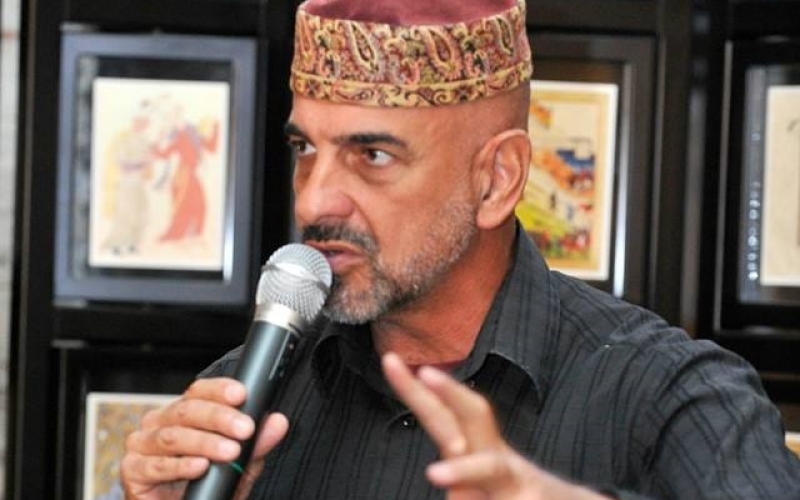
Many still remember the TV documentary series “Baku Secrets”, broadcast by Public Television a few years ago. The long-awaited program was presented by historian and researcher Fuad Akhundov. A graduate of the Faculty of Oriental Studies at Baku State University and Harvard University, with a Master’s degree from the University of Toronto, Fuad Akhundov has been passionate about the history and architecture of Baku since his student years. Through his work, he has restored the memory of many notable figures whose names were forgotten during the Soviet era and uncovered long-closed chapters of the city’s history. On September 27, Fuad Akhundov visited the Baku Book Center as part of the “Facing History” project. His lecture, titled “Ethno-Cultural Diversity of Pre-Revolutionary Baku”, offered an insightful look at the Azerbaijani capital during the first oil boom. Discussing the ethnic composition of Baku at the turn of the 19th–20th centuries, Akhundov highlighted the city’s unprecedented population growth during the oil boom, with Azerbaijani and Russian communities forming the largest groups. He also introduced outstanding figures from Jewish, Polish, German, Tatar, Lezghin, Ossetian, and other communities. Among them, he noted the medical contributions of pediatrician E.Y. Hindes, after whom the Children’s Tuberculosis Sanatorium in Zagulba was named; Stanislav Despot-Zenovich, Jewish mayor of Baku from 1875 to 1891, during a period of rapid population growth; and Pavel Pototski, a member of the Polish community and pioneer of offshore oil production in Azerbaijan. Akhundov also highlighted Tatar women who advanced education in Azerbaijan, as well as the Greek actress Panfilia Tanailidi, known by her stage name Sureya Zangezurly, who performed over 50 roles at the Azerbaijan Drama Theater before falling victim to Stalin’s purges.The lecture was accompanied by a photo slideshow showcasing Baku in the late 19th and early 20th centuries. In conclusion, Fuad Akhundov praised the facilities of the Baku Book Center and expressed gratitude to the Heydar Aliyev Foundation and the Center for organizing the event. “I am confident that the Baku Book Center will become a place where the spirit of Baku is revived,” he said.